
Why Solana NFT Tracking Feels Like Detective Work — and How to Do It Right
Okay, so check this out—I’ve been poking around Solana explorers and NFT trackers for years. Wow! The ecosystem moves fast. Really? Yes. At first glance it looks simple: a mint, a transfer, a sale. But then you start following wallets, and somethin’ weird shows up. My instinct said “watch that wallet” and, hmm… it paid off.
Whoa! On-chain data is messy and glorious at the same time. Medium-level tools give you addresses and timestamps. Longer-form analytics reveal patterns across collections, bots, and wash trading that only show up if you stitch transfers, bids, and listings into a timeline. Initially I thought raw transaction lists would be enough, but then realized you need richer context—token metadata, creator royalties, marketplace flows, and holder concentration—to make sensible decisions. Actually, wait—let me rephrase that: raw data is necessary but far from sufficient for real-world NFT work.
How an NFT Tracker on Solana Actually Helps You
If you’re flipping, building, or just collecting, a proper tracker gives you a handful of game-changing views. Short version: mint monitoring, holder distributions, trade velocity, floor movement, and wallet behavior. Here’s the thing. Mint monitoring lets you spot gas-swept mints and immediate flips. Holder distribution exposes how concentrated a collection is—one whale can tank a floor if they sell. Analytics over time show liquidity cycles, and that matters when you decide whether to hold or cut bait.
On a practical level I use these patterns to set watchlists and alerts. Seriously? Yep. Alerts on large transfers, rapid list/delist cycles, or unusual buys catch a lot of shady behavior before it becomes a headline. And when a collection’s volume spikes while unique holders stay flat, that smells like coordinated activity—good to know, even if you’re just curious.
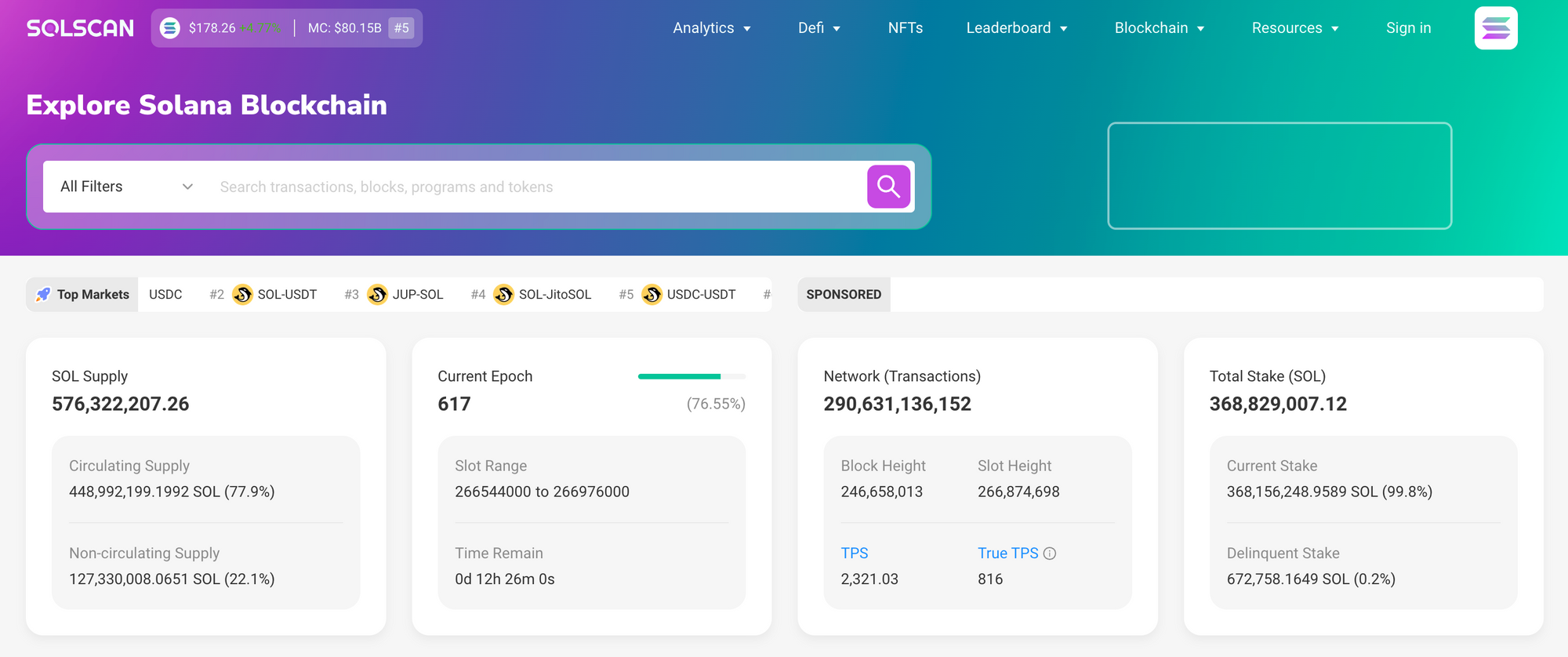
For hands-on work, explore an explorer that combines transaction-level detail with collection analytics and wallet profiles. I recommend checking a reliable interface like the solscan explorer official site for quick lookups (I use it all the time). It shows token transfers, recent holders, and signature-level logs, which help you map out how value flowed during a mint or drop. I’m biased, but that single-pane access speeds up decisions—very very important when markets are volatile.
On the technical side, here’s what to watch:
- Mint-to-first-sale time: bots often flip within minutes.
- Top holder concentration: if the top 5 wallets own >50%, price manipulation risk rises.
- Wash-trade detection: repeated buys/sells between clustered wallets point to artificial volume.
- Program logs & instructions: these reveal marketplace routing, escrow usage, and royalty enforcement.
- Metadata anomalies: mismatched creators or suddenly changed images can be red flags.
Hmm… some of this sounds like detective work because it is. On one hand, data is neutral. On the other, human patterns repeat, and those repeats are profitable to spot. On the other hand though, there are plenty of false positives—so you need to combine metrics, not rely on a single signal.
Building Practical Alerts and Dashboards
Start with a triage list: mints, large transfers, and rapid listing spikes. Short alerts first, then dig deeper. When I set up alerts, I prefer a two-step approach—first surface the anomaly, then automatically fetch the wallet history and collection chart. That second step saves time. Most explorers let you filter by program ID or token mint; using those filters you can create fairly precise monitors for new mints or marketplace activity.
For teams or serious collectors, exportable CSVs and webhook support matter. You want a pipeline that pushes events into Slack or a serverless function that enriches data and runs heuristics. I built one once that flagged any wallet that listed three different pieces within 24 hours—turned out it caught several bot flippers during a big drop. Not 100% perfect, but helpful.
There are tradeoffs. Some dashboards smooth volatility too aggressively, obscuring spikes. Others surface every micro-move and overwhelm you. Pick a pace that fits your workflow. (oh, and by the way… keep a lightweight watchlist for those top-10 wallets in any collection.)
FAQ — Quick answers you actually use
How do I tell if an NFT sale is organic or wash-traded?
Look for repeated buys/sells between the same cluster of wallets, short holding times, and patterns where volume jumps but unique holders don’t. Correlate on-chain logs with marketplace programs to see routing. If many sales funnel through a single intermediary wallet, that’s suspicious.
Can I track a mint in real time?
Yes. Subscribe to mint events by program ID or listen for new token mints tied to metadata creators. Then watch for immediate transfers and listings. Real-time tracking catches fast flips and bot behavior, but be ready for noise—the rush around big drops creates a lot of false alarms.
Which metrics should I trust the most?
Use a combination: unique holders, top-holder share, 24h and 7d volume, and average holding time. None are perfect alone. On one hand, volume shows market interest, though actually it can be manipulated. On the other, holder distribution reveals systemic risk.
I’m not 100% sure about every edge case—this space changes weekly—but the practical patterns above hold up more often than not. Something about Solana’s speed means activity looks frantic, yet patterns emerge if you sit with the data. This part bugs me in the best way. You learn, you tune, and you repeat.
Final thought: treat explorers and NFT trackers like binoculars, not prophecy. They give you a clearer view, but your read still needs judgment. If you want a fast lookup or a deep-dive, start with the interface mentioned earlier and build from there. The market will teach the rest—sometimes the hard way, though often with a neat lesson tucked into the chaos…